...

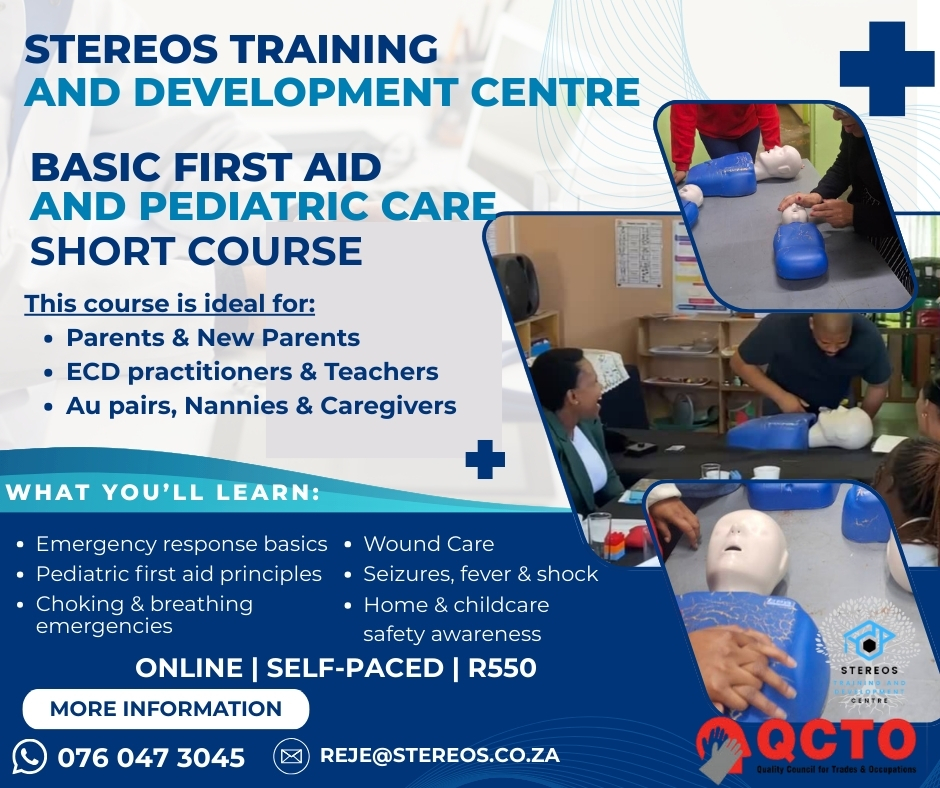
Basic First Aid and Pediatric Care Short Course

Wishlist Share

About Course

This practical, beginner-level first aid course is designed for anyone responsible for the safety of young children — preschool staff, au pairs, home-based carers, nannies, daycare assistants, playgroup leaders, camp leaders, and parents. Delivered as a hybrid course, it combines two interactive online theory sessions with one intensive in-person practical where participants practice lifesaving skills and complete the assessment. The content is child-focused, easy to follow, and emphasises real-world scenarios common to home and childcare settings.

The course also covers essential legal and safeguarding responsibilities (consent, duty of care, mandatory reporting, and record-keeping) so caregivers know what to do — and what they must document — when an incident occurs.

Show More

What Will You Learn?

  • By the end of this course you will be able to:
  • Perform CPR and choking relief for infants and young children.
  • Manage common emergencies: bleeding, burns/scalds, allergic reactions/anaphylaxis, seizures, fevers, and head bumps.
  • Recognise signs of respiratory distress, shock and anaphylaxis, and take appropriate action.
  • Safely administer pre-approved medication and follow written parental instructions.
  • Apply basic safeguarding principles and understand your legal obligations (consent, reporting, confidentiality).
  • Complete accurate incident and medication records and communicate clearly with parents/guardians.
  • Prevent accidents through improved supervision, safety checks and simple environmental changes.

Course Content

Integrity Course (Must Be Completed First)
This is a short course and the Do's and Don't with regards to our hybrid course. This needs to be completed before the start of the course.

  • Basic First Aid and Pediatric Care Short Course Textbook
  • Integrity Course Lesson
    06:21
  • Integrity Course MCQ

What is First Aid and why is it important to know?
First Aid is all about taking action in the first critical moments of an emergency. You’ll discover how small steps—like staying calm, protecting yourself, and helping others—can make the difference between recovery and tragedy. Be the person who saves lives, not just watches.

Legal Responsibilities & Child Safeguarding
When helping others, it’s not just about knowing what to do—it’s also about doing it the right way. In this section, you’ll learn about your legal responsibilities as a first aider, including duty of care, consent, and the importance of staying within your training. You’ll also explore child safeguarding, gaining the knowledge to protect vulnerable children, recognize signs of abuse or neglect, and take the right steps to keep them safe. This is about being prepared not only with skills—but with the responsibility and awareness that make you a trusted first aider.

Module 1: First Steps as a First Aider
Learn the golden rules of being a first aider: check for danger, call for help, give care, and provide comfort. You’ll master easy-to-remember acronyms like CAB (Circulation, Airway, Breathing) and SAMPLE (Signs, Allergies, Medications, Past history, Last intake, Events) to guide you through emergencies with confidence.

Module 2: Vital Signs & CPR
This module is about recognizing the signs of life. You’ll practice checking responsiveness, monitoring breathing, and performing CPR on adults, children, and infants. You’ll also learn life-saving skills like the recovery position and the head tilt maneuver. By the end, you’ll feel ready to act when seconds truly matter.

Module 3: Acute Conditions
From heart attacks and strokes to asthma attacks and epilepsy, this module teaches you how to recognize the warning signs and respond with speed and confidence. You’ll learn the simple steps that could help someone live to see another day—all explained in a way that anyone can remember under pressure.

Module 4: Accidents & Emergencies
Life is unpredictable—choking, burns, and sudden accidents can happen anywhere. In this module, you’ll discover how to clear blocked airways, cool burns, and provide quick relief before help arrives. With practical training and videos, you’ll walk away knowing exactly what to do when panic strikes.

Module 5: Trauma Care
Blood, wounds, fractures, and even amputations—trauma can look scary, but with the right skills you’ll know how to take control, stop bleeding, stabilize injuries, and keep someone alive until professional care takes over. You’ll even practice bandaging and splinting techniques that every first aider must know.

Module 6: Pediatric First Aid Summary
Children need special care in emergencies. This module covers fevers, nosebleeds, head bumps, stings, poisoning, and safe medication use. You’ll leave with the knowledge to protect the little ones in your care—whether at home, school, or work.

Student Ratings & Reviews

No Review Yet
No Review Yet
Shopping Cart
Seraphinite AcceleratorOptimized by Seraphinite Accelerator
Turns on site high speed to be attractive for people and search engines.